Virgin Australia's Shrinking Network: A Short-Term Optimisation with Long-Term Costs
To infinity and back again. Virgin Australia's network is shrinking just as Qantas Group's expands — and the gap is structural, not cyclical.

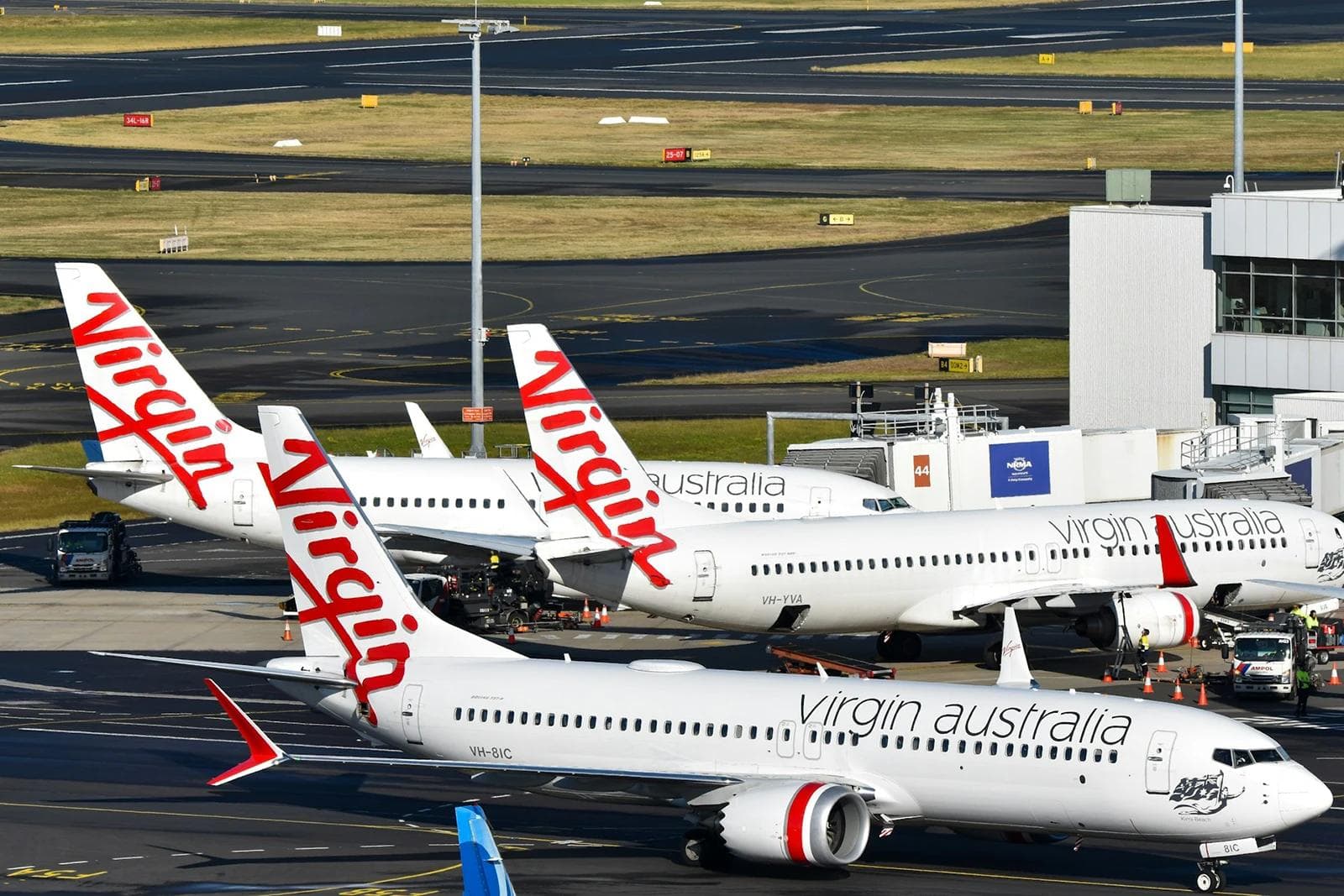
Virgin Australia announced on 21 May a further round of route suspensions: Brisbane–Apia indefinitely from 25 August, Brisbane–Uluru and Melbourne–Uluru from 24 and 25 October respectively, and the cancellation of two seasonal services (Adelaide–Hobart and Perth–Launceston) that were scheduled to launch in October. None have a re-entry date. This follows the indefinite suspension of Brisbane–Alice Springs from 14 July and Adelaide–Cairns from 1 August.
The reasons for these cuts are not, in isolation, surprising. What is striking is how differently Virgin and the Qantas Group are responding to the same fuel shock — and what Virgin’s response signals about the airline’s strategic posture heading into FY27.
A tale of two responses
The Middle East conflict pushed jet refining margins from around US$20 per barrel in February 2026 to a peak of around US$120. Both carriers updated the market in mid-April, and their responses diverged sharply.
Qantas Group is hedged on roughly 90% of its 2H26 crude oil exposure but largely unhedged on refining margins, producing an A$800m increase in its 2H26 fuel bill to A$3.1–3.3bn. Its response has been tactical and short-term: a 5-percentage-point reduction in 4Q26 domestic capacity, redeployment of widebodies to Europe where demand is strong, a doubling of 2H26 international RASK guidance, and time-bound suspensions of marginal routes (Sydney–Busselton, Darwin–Gold Coast, Melbourne–Hamilton Island, Melbourne–Coffs Harbour).
Virgin Australia is hedged 92% on Brent crude and 71% on refining margins for the remainder of FY26, with an estimated 2H26 fuel cost impact of just A$30–40m. On the surface, Virgin is the better-insulated carrier. Yet Virgin is the one making longer-term structural cuts with no re-entry dates — including exiting another short-haul international route (Apia) and from one of Australia’s most iconic leisure destinations (Uluru).
The explanation lies in FY27. Virgin has hedged 93% of Brent crude but only 15% of refining margins for 1H27. The protection that currently insulates Virgin from the refining-margin spike evaporates from July 2026. If refining margins remain elevated, Virgin’s fuel cost impact in 1H27 will not be A$30–40m — it will be a multiple of that, on a smaller revenue base than Qantas and without Qantas’s international yield tailwind.
The recent network cuts are not a response to current fuel pain. They are a pre-positioning for fuel pain that arrives in FY27. The Qantas Group is managing the shock here and now; Virgin is bracing for it.
A pattern, not an event: Uluru and the credibility problem
The Uluru decision deserves attention because it is not Virgin’s first attempt at the route — and the pattern it establishes is the bigger story.
Virgin launched Brisbane–Uluru and Melbourne–Uluru in June 2024 with considerable fanfare: a partnership with the Northern Territory Government and Voyages Indigenous Tourism Australia, 62,000-plus seats per year on offer, four-times-weekly Melbourne and three-times-weekly Brisbane services, and a public commitment from CEO Jayne Hrdlicka that “we look forward to once again connecting Australians and international tourists alike to the spiritual heartland of Australia.” Sydney–Uluru had previously been cut during the pandemic and not restored.
By April 2026 — less than two years in — Melbourne–Uluru had been trimmed from three weekly to two. By the May announcement, both routes are gone entirely from late October. Total operating life from launch to indefinite suspension: roughly 2 years. The same airline that re-entered the Red Centre with significant tourism-board backing has now exited it, again, before the partnership has had time to mature into stable demand.
This pattern is not new for Virgin. The Cairns–Tokyo Haneda route, launched June 2023 to preserve a valuable Haneda slot Virgin had held since 2019, was axed less than 20 months later in February 2025. Virgin ultimately surrendered its Haneda traffic rights. The aircraft were redeployed domestically — the same Boeing 737 MAX 8s that are now slated, in part, to underwrite the routes being cut today. Brisbane–Apia, only restarted in 2023, is being suspended indefinitely from August 2026 after roughly three years of operation.
The post-administration Virgin is, by design, a more profit-disciplined business than the pre-2020 version. The Bain-era leadership has been explicit that the airline will not chase unprofitable flying. That is reasonable, and shareholders should welcome it. But it has a corollary that tourism boards, indigenous tourism operators, regional governments, alliance partners and corporate travel managers all need to internalise: Virgin cannot be relied upon as a long-term partner on niche, thin or developmental routes. The airline’s stated strategy and demonstrated behaviour both confirm this — entry and exit cycles compressed to two-to-three years, no patience for routes that require multi-year demand-building, and a willingness to walk away from sunk partnership commitments when fuel cycles turn.
The contrast with how competitors handle similar markets is instructive.
Jetstar built Rarotonga methodically. Launched June 2023 with twice-weekly Sydney services on A321neo LRs, the route scaled to three weekly, then four, then five weekly in peak season by 2025 — three frequency uplifts in two years. In May 2026 Jetstar added Brisbane–Rarotonga, taking total annual seats to the Cook Islands above 110,000. The Cook Islands government partnered with Jetstar throughout. The route grew because Jetstar treated it as a multi-year build, not a quarterly performance test.
Qantas is investing through the cycle in Tasmania. The QantasLink A220 fleet — 29 aircraft on order, deliveries through 2027 — has been progressively deployed onto Tasmanian routes since 2024: Melbourne–Hobart, Sydney-Hobart, Sydney–Launceston. In May 2026 Qantas announced 40,000 additional seats on Brisbane–Hobart from October 2026, with daily summer services backed by the Tasmania Aviation Attraction Fund. Qantas is also opening a brand new lounge with increased capacity in Hobart in early 2027, whilst Virgin has no lounge offering in Hobart. This is the opposite of Virgin’s approach: invest in purpose-built aircraft, partner with state governments, build frequency over years, and stay through the cycle.
The structural difference is that Qantas’s A220 program and Jetstar’s A321neo LR program were both designed around the economics of thinner, leisure-leaning markets. Virgin’s 737-800/MAX 8 fleet is not. The cuts Virgin is making in 2026 are, in part, an admission that its single-aircraft-type strategy is ill-suited to the kind of thin-market flying that requires new generation aircraft economics. The reality is Qantas and Jetstar can sustain routes that Virgin cannot.
Western Sydney: the next gap opens
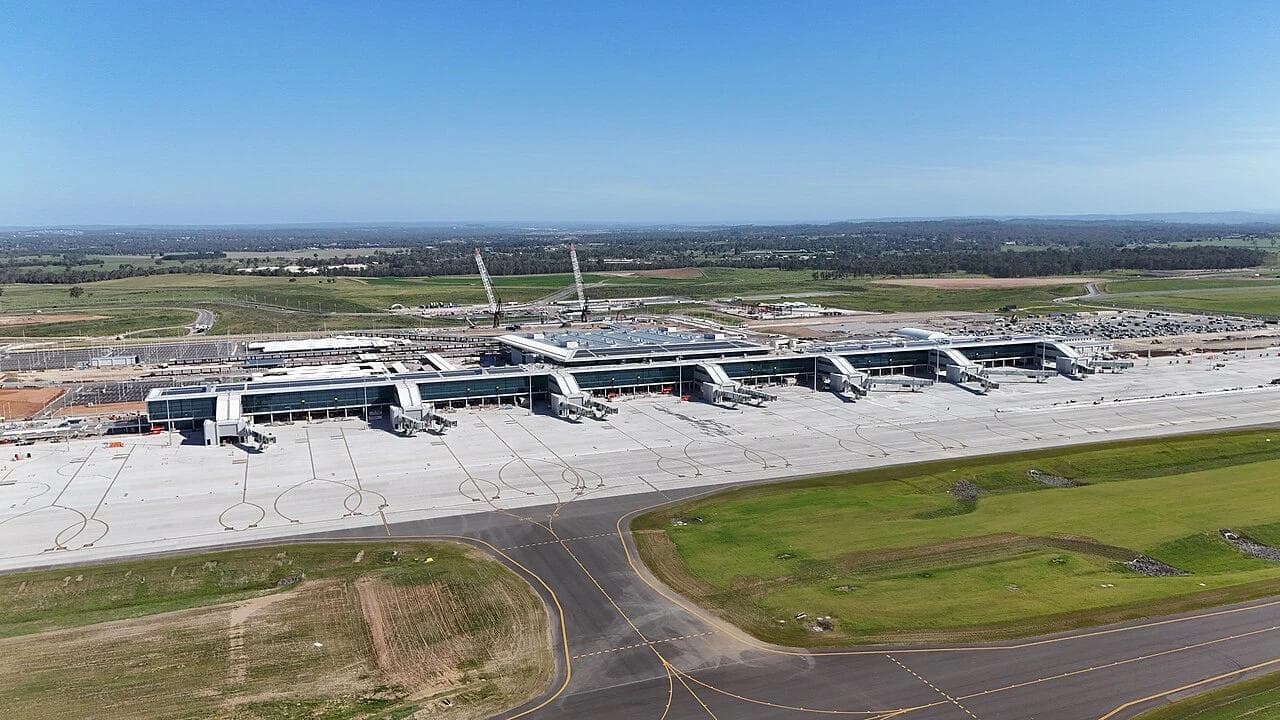
The clearest forward-looking signal of the strategic divergence is Western Sydney International Airport (WSI), which opens on 25 October 2026.
On 10 June 2026, the Qantas Group confirmed its launch schedule. Jetstar will operate the first commercial passenger flight from WSI, with three new routes from October 2026: Melbourne (up to 14x weekly), Gold Coast (4x weekly), and Brisbane (3x weekly), all on A320 aircraft. Qantas will follow on 28 March 2027 with two routes — Melbourne and Brisbane — at four weekly flights each, operated by QantasLink E190s. Combined, the Qantas Group adds five new domestic routes from a brand-new metropolitan catchment of more than 2.5 million people.
Virgin Australia has made no comparable commitment. As of mid-2026, Virgin has not announced a launch schedule, route plan, or aircraft allocation for WSI.
This is the gap that matters most for long-term competitive position. WSI is not a marginal regional airport — it is a 24-hour, curfew-free gateway serving the fastest-growing part of Australia’s largest aviation market, and it will be the only Sydney basin airport accessible to many Western Sydney travellers without a 60-90 minute road journey. The carrier that establishes a credible Western Sydney presence in the first 18-24 months will shape corporate, SME and leisure travel patterns for that catchment for the next decade. The carrier that does not will face a structural cost-to-enter disadvantage when it eventually arrives — Qantas Group will have slot priority, established frequency, brand recognition with the local catchment, and the corporate travel manager mindshare that comes from being there first.
Virgin’s absence is consistent with the rest of the picture in this analysis. WSI launch requires capital commitment, multi-year frequency build, and tolerance for sub-economic returns in the early ramp. Each of these runs against the post-administration discipline Virgin has shown elsewhere. But it raises an uncomfortable question for VGN shareholders: if Virgin cannot or will not commit to Australia’s most significant new domestic aviation opportunity in fifty years, what is the long-term growth story?
The Qantas Group will likely add five routes to its domestic network through WSI by April 2027. Virgin is removing five routes through the same period. That is a ten-route swing in relative network breadth across a single year — and unlike the cyclical fuel response, the WSI gap is structural and durable.
Network shape, not network size
Virgin already operates the smallest of the three major domestic networks by route count. The ACCC’s competitor monitoring puts Virgin between 57 and 60 routes through 2025, against Jetstar at 59–65 and Qantas at 107–112. After the announced suspensions, Virgin’s count will likely fall to around 50–52 by late 2026 — its lowest level in the ACCC monitoring series. By April 2027, with Qantas Group having added five WSI routes and Virgin having added none, the route-count gap to the Qantas Group widens further.
But route count is not the right lens. Roughly 45% of Virgin’s revenue comes from the Sydney–Melbourne–Brisbane golden triangle. The routes being cut are almost entirely outside the triangle: international short-haul, regional and remote, and capital-to-non-capital leisure markets. The structural effect is that Virgin’s network is becoming more concentrated on its highest-margin trunk routes, and thinner on everything else.
This is a logical short-term optimisation under fuel pressure. Trunk routes likely have the seat density and frequency to absorb fare increases; sub-daily leisure services do not. The fuel-cost elasticity of profitability is much higher on thin routes, so under a high fuel scenario the case for trimming them is straightforward.
The problem is what that optimisation costs Virgin in the medium term.
What concentrated networks lose
A network heavily weighted to the golden triangle, with a thinning periphery, has three structural weaknesses that compound over time.
It reduces value to alliance partners. Virgin’s relationship with Qatar Airways (now a 23% shareholder, plus the 28-weekly Doha wet-lease arrangement) and its broader codeshare network rely on Virgin offering meaningful onward connectivity beyond the gateway cities. A Qatar passenger arriving in Sydney or Brisbane is a connection candidate to Cairns, Hobart, Launceston, Uluru, Alice Springs, Apia. Each route cut from Virgin’s network is a connection that either disappears or must be handed to a competitor. The same logic applies to United, Singapore Airlines, ANA and other interline partners. Alliance and codeshare value is a network-effects business: it scales superlinearly with the number of viable connections, not linearly with seat count on trunk routes. Concentration on the triangle weakens this lever — and the credibility problem compounds it, because alliance planners build connecting itineraries against networks they trust will still be there in three years.
It compromises the ability to generate unique O&D demand. Trunk routes are commodity markets — Virgin, Qantas, and Jetstar all fly them, fares are tightly competitive, and the marginal traveller is choosing on schedule and price rather than on network. The routes that generate uniquely Virgin-favouring demand are the ones where Virgin is the only carrier, the only competitive option, or the carrier with the most attractive frequency/timing. Apia prior to Qantas’ entry, Uluru ex-Brisbane, Launceston ex-Perth — these are the routes that give a traveller a reason to choose Virgin specifically, often locking in the return leg and connecting feeders too. Cutting them concedes the demand-creation game to the Qantas Group, which is simultaneously investing in fleet renewal that will let it sustain its current network, and grow its unique network, through the cycle.
It weakens Virgin’s positioning with two valuable segments:
SME corporate travel outside the triangle. SME and mid-market corporate travellers are disproportionately likely to fly to second-tier business markets — Hobart, Launceston, Cairns, Alice Springs, Townsville, Darwin. Unlike enterprise corporate travel (which is concentrated on the triangle and is locked in via negotiated agreements), SME travel can often be won route by route, and a customer who cannot rely on Virgin to serve their full travel pattern will default to Qantas across the board. Network gaps in this segment are sticky: once a corporate user moves to Qantas for the routes Virgin doesn’t fly, the triangle bookings tend to follow. The same dynamic will apply to Western Sydney corporate travel from late 2026 onwards — and once a Western Sydney-based SME builds its travel program around Qantas Group, the lock-in is durable.
Premium leisure customers seeking new destinations. The most valuable leisure customers — those willing to pay for business class, or upgraded products on leisure routes — are precisely those most attracted by novel or aspirational destinations rather than well-trodden ones. Destinations such as Uluru are exactly the kinds of destinations that this segment seeks out. Leisure markets are also where Virgin’s product proposition can command a yield premium, as competition tends to skew more to Jetstar than Qantas. Concentrating on the triangle leaves Virgin competing for premium customers on routes where its structural advantage is the lowest.
The strategic question
Virgin’s current direction is a defensible response to an FY27 fuel outlook that looks materially worse than FY26. Pruning thin routes preserves near-term margin and protects FY27 earnings against a hedge book that no longer cushions refining-margin volatility.
But strategic posture is revealed by what an airline does when conditions tighten, not when they’re easy. Qantas is using this period to reinforce its position: ordering aircraft, redeploying widebodies to growing international markets, maintaining domestic network breadth with mostly time-bound cuts, adding capacity into Tasmania with an aircraft type purpose-built for the route economics, and committing to Western Sydney with both mainline and low-cost operations from the day the airport opens. Jetstar is methodically building Pacific leisure markets it intends to be in for the long term, and taking the inaugural commercial flight from Australia’s first new major airport in fifty years. Virgin is using the same period to retrench: indefinite suspensions, cancelled seasonal launches, withdrawal from a short-haul international route only restarted in 2023, a second exit from Uluru in five years, and conspicuous silence on Western Sydney.
Two airlines, one fuel shock, two strategic readings. Qantas appears to view elevated fuel costs as a transient cyclical pressure to manage through; Virgin appears to view them as a structural shift requiring permanent network rebasing. The market will not know which read is correct until refining margins resolve one way or the other.
What we can say now is that Virgin is taking the structural risk on the network side rather than the balance-sheet side. If fuel pressure eases, Virgin will have permanently ceded ground in tourism markets, alliance value, SME share, premium leisure positioning, and the Western Sydney foothold that the Qantas Group is now building unopposed. If fuel pressure persists, Virgin will have correctly protected margin but will emerge from the cycle as a noticeably smaller and more concentrated airline than it entered.
There is also a reputational cost that is harder to quantify but real. Tourism boards, indigenous operators, state governments and alliance partners are now learning — through Cairns–Haneda, Uluru, Apia, and the cancelled Tasmanian launches — that Virgin is not a long-term partner on developmental routes. That lesson, once learned, is not easily unlearned. The next time Virgin announces a thin-market route with a state government partnership and a tourism board ribbon-cutting, the implicit question on the other side of the table will be: are you here for a good time, or a long time?
The ACCC's subsequent domestic monitoring report will, for the first time in the series, likely show Virgin Australia operating a network in the low 50s. The Qantas Group's network will be growing — modestly through the cycle, and strategically through Western Sydney. That is not just a smaller network; it is a different airline — and one whose business model, post-administration, has now been clearly revealed.
Sources
- Virgin Australia Newsroom. Route suspension announcements, May 2026.
- Virgin Australia Newsroom. Uluru launch announcement, June 2024.
- Qantas Investor Relations. 2H26 fuel cost update.
- Qantas Newsroom. WSI launch schedule, June 2026.
- ACCC. Domestic airline competition monitoring report, Mar 2026.
- ACCC. Domestic airline competition monitoring report, Jun 2026.