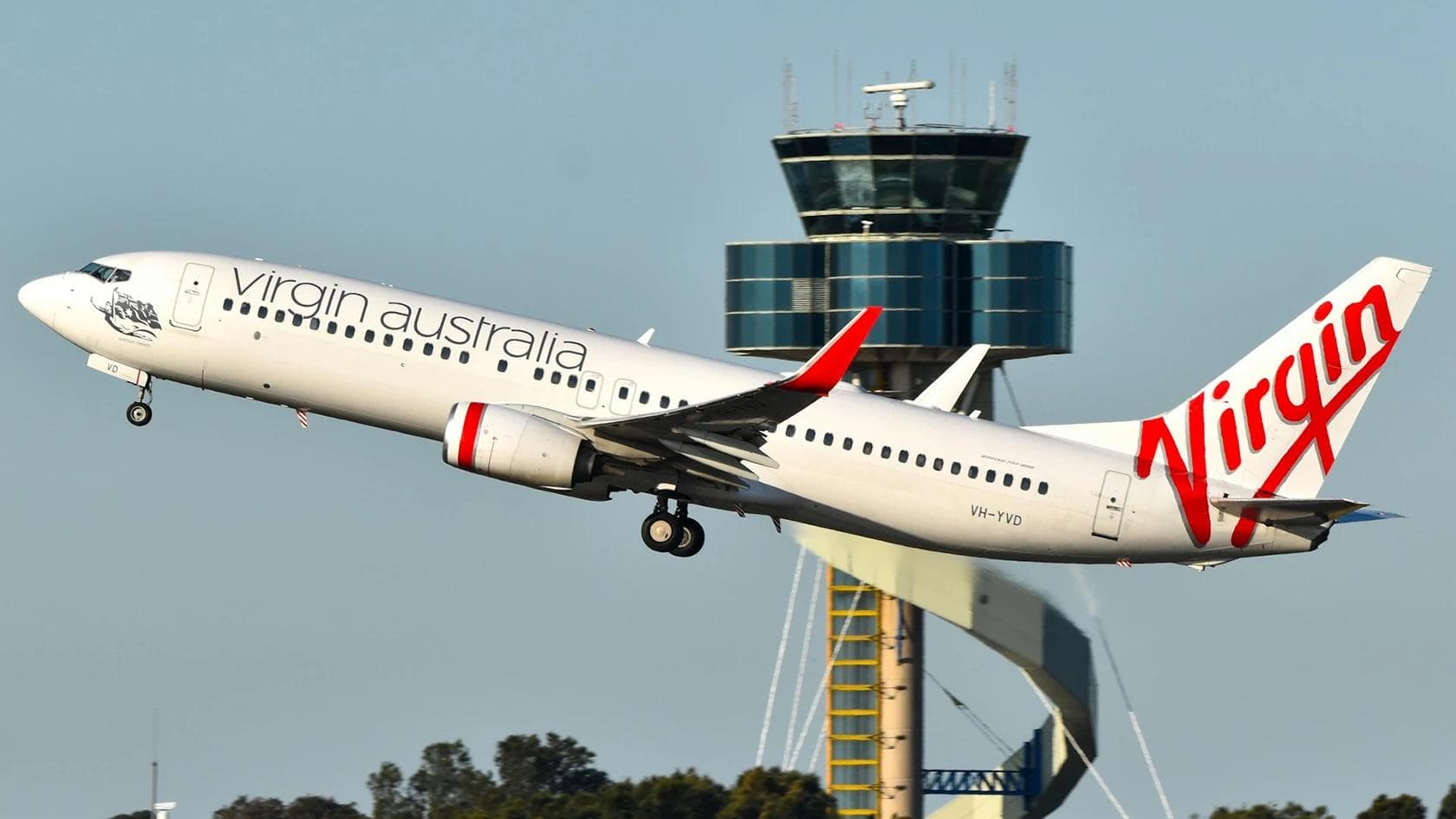
Qantas does not let flight credits expire. Virgin Australia should do the same.
Australia's two major airlines now sit on opposite sides of a simple test: when a customer's flight doesn't happen, whose money is it?

When an airline holds money for a flight a customer doesn't take, that money belongs to the customer. The only real question for any credits-and-refunds policy is how quickly and cleanly the airline gives it back. By that test, Australia's two major carriers are now miles apart.
What good actually looks like
Much of the world has settled the argument. In the United States, since October 2024, airlines must automatically refund passengers in cash — to the original payment method, within seven business days — whenever a flight is cancelled or significantly changed. A credit is permitted only if the passenger actively chooses it over the cash. Europe and the UK reach the same place: under EU261 and UK261, a cancelled flight gives the passenger a choice between rerouting and a full refund within seven days, and that choice belongs to the passenger, not the airline.
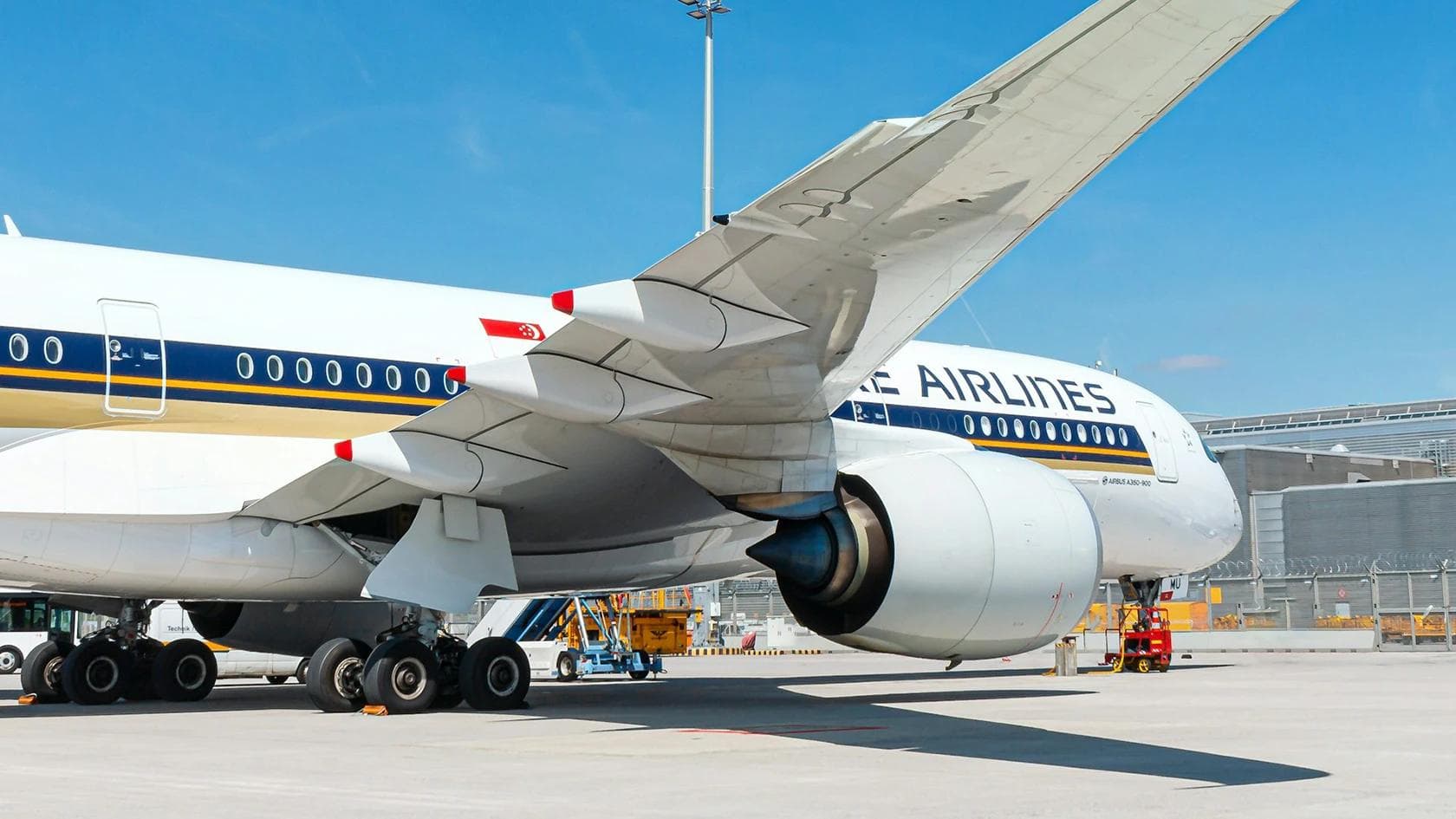
The most instructive example, though, is commercial rather than regulatory. During COVID, Singapore Airlines offered customers a choice: full cash refund, or keep the credit with a bonus on top — recognising that the float was worth paying to retain. SIA extended validity multiple times as travel remained restricted, though unused credits ultimately still expired. The approach was not perfect, but the incentive design was right: an airline that understood the working-capital value of customer prepayments, and priced its behaviour accordingly. Retention by incentive, not by default expiry.
Qantas: dragged to the right answer — and now the best in Australia
Qantas did not start here. Through the pandemic it sat on more than a billion dollars of credits, carrying expiry dates and difficult to use. In 2023 the position collapsed under public and regulatory pressure: the ACCC took action over "ghost flights," and Qantas conceded to a Senate committee that it was holding roughly $100 million more in credits than it had disclosed.
Then it changed course. In August 2023 Qantas removed the expiry on all remaining COVID credits and made them refundable in cash at any time. It later settled with the ACCC for $120 million. Today a Qantas COVID-credit holder can request their money back whenever they like — by a distance, the most consumer-friendly credits policy of any Australian airline.
It is not perfect. The weak point is rebooking: redeeming a credit against a new fare can still trigger change fees and a fare difference depending on the original ticket, so a "credit" can quietly cost more than the flight that was lost. Consumer group Choice found 44 per cent of Australians rebooking with credits paid more than the original fare. If the money is the customer's, spending it shouldn't carry a toll.
Virgin Australia: the same playbook Qantas rightly abandoned
On 30 June 2026, around $93 million of unclaimed customer credits are due to expire at Virgin Australia, with the value reverting to the airline — a figure aired at the recent Senate inquiry into aviation consumer protections. These are post-administration, COVID-era credits, issued for flights between 21 April 2020 and 31 July 2022. The condition attached is strict: customers must complete their travel by 30 June, not merely book it, which closes the practical redemption window weeks early. To be fair, Virgin says it has made the credits easy to use, allowed transfers to family and friends, and reminded customers repeatedly.
It is worth being precise about what is expiring, because Virgin has been here before — twice. There have been three distinct tranches of customer credits since administration.
The first was the pre-administration pool: tickets booked before 20 April 2020 were converted under Bain Capital's court-approved restructure into restrictive "Future Flight Credits" and expired on 31 December 2023. The FY25 annual report confirms the gain: a $277.9 million one-off booked in FY24, the single biggest driver of a year in which net profit nearly doubled to $545 million and Virgin paid Bain more than $348 million in dividends.
The second tranche was the post-administration Standard Credits issued between 21 April 2020 and 31 July 2022 — extended several times under ACCC pressure before expiring on 30 June 2025. Virgin's FY24 accounts showed approximately $107 million of these still outstanding at that point; the FY25 report treats any gain from their expiry as a non-cash item excluded from Underlying EBIT, but does not separately disclose the amount.
The third, and current, tranche is the ~$93 million due to expire on 30 June 2026.
Taken across all three tranches, the aggregate customer money that has passed through Virgin's P&L or is about to do so is approaching $480 million — equivalent to close to 46 per cent of the $1.04 billion in cash Virgin held on its balance sheet at 30 June 2025. That figure, drawn entirely from customer prepayments, is not a rounding error.
The credits now expiring are a separate pool from what came before. But the pattern is the same: money customers paid in good faith, converting into the airline's result when it lapses. None of this is illegal. The original restructure was endorsed by the Federal Court, and an airline emerging from administration can choose which liabilities to carry. But lawful is a low bar — Qantas's old policy was lawful too. Letting credits expire is a choice.
A credit is free money — and the prize for expiring it is small
Letting credits expire serves no operational purpose. Airlines are paid upfront: the fare sits on the books as unearned revenue, a liability that pays no interest. It is float — the airline has the use of the customer's cash, for free, until it flies them. A flight credit simply extends that float. An unredeemed credit is, in effect, an interest-free loan from the customer to the airline, far cheaper than borrowing at market rates. The financing benefit already exists from the moment of booking; expiry doesn't unlock it. It simply converts a customer liability into income, once.
And the prize is small. Around $93 million barely registers against a business with close to $6 billion in annual revenue — for scale, it is less than twice the roughly $50 million package Virgin reported for its departing chief executive in a single year. Set against the customer goodwill it burns — the kind that takes years to rebuild and never appears on a balance sheet — expiry is hard to justify as a good trade on any horizon longer than the next reporting period.
The cost is borne by those least able to absorb it
There is an equity dimension that policy too often ignores. If a customer still holds a credit three or four years on, it is rarely for want of trying — by most accounts, the bulk of what remains has sat untouched for more than three years. It is because life intervened: money got tight, health or family circumstances changed, the trip they were saving for never became possible. These are usually small balances, held by infrequent travellers. The frequent flyer rarely worries about a credit — they know how to navigate the rules and will use it well before any deadline. The person the deadline actually catches is the one with the least flexibility, the smallest balance, and the least ability to absorb the loss. That imbalance is the wrong way round.
It is worth sitting with the instinct underneath it, too. Any of us — including the executives who shape an airline's public standing — would expect a prompt, fair refund when we are the customer and the service doesn't happen. That instinct is universal and entirely reasonable. The real test of a policy is whether a company holds its customers to the same standard its own people would expect for themselves.
Better revenue management doesn't depend on customer misfortune
None of this means surrendering revenue management. Differentiated fares, fare-class fences, advance-purchase rules and change conditions are legitimate tools — they're how an airline matches price to willingness to pay. But there is a line between revenue management and revenue extraction, and expiry sits on the wrong side of it. Good revenue management does not hinge on a customer's misfortune.
The better model is already written. Treat travel credit the way other industries treat gift cards: in Australia, a retail gift card must by law stay valid for at least three years (in the US, five), with no value-eroding fees. Airlines sit outside that regime, but nothing stops them adopting the same principle — and, as a deadline nears, widening rather than narrowing how the value can be used. Convert dormant credit into loyalty points to re-engage the customer; allow it to be gifted to family, friends or a nominated charity; let it be redeemed across a broader set of products. Most carriers already have the loyalty infrastructure, and SIA's approach during COVID pointed in the right direction.
The fix is already written
Good public policy — and good airline consumer settings — should recognise this imbalance rather than rely on it. To its credit, Qantas has gone a long way towards that: no expiry, refunds on request. Virgin, and frankly every other carrier, should do the same. The industry drew down a great deal of consumer trust through the pandemic, and refund and credit policy is one of the clearest, lowest-cost places to start rebuilding it. The benchmark isn't hypothetical: it's at Changi, it's in the US and Europe, and it's around the corner at Terminal 3 in Mascot.
Reading the second-order effects of a decision like this — where revenue management, loyalty economics and customer trust collide, and where the real cost of a short-term gain tends to hide — is the work I do with airlines, investors and boards. If you're weighing a policy like this, pressure-testing one, or trying to understand what a competitor's move actually signals, let's talk.
Sources
- US DOT. Final rule on automatic airline refunds, 2024.
- UK Civil Aviation Authority. EU261/UK261 passenger rights.
- Your Europe. EU air passenger rights.
- Singapore Airlines. COVID travel-waiver terms, 2020.
- Qantas Investor Relations. FY25 Annual Report.
- Qantas Newsroom. August 2023 COVID-credit announcement.
- ACCC. Action against Qantas, $120m settlement.
- Choice. Survey on credit redemption costs.
- Parliament of Australia. Senate inquiry, Aviation Consumer Protection Bill 2026.
- ASIC Published Notices. Virgin Australia Holdings 2023-24 accounts.
- Virgin Australia. FY25 Annual Report.
- Australian Consumer Law. Gift card provisions, minimum 3-year expiry.